
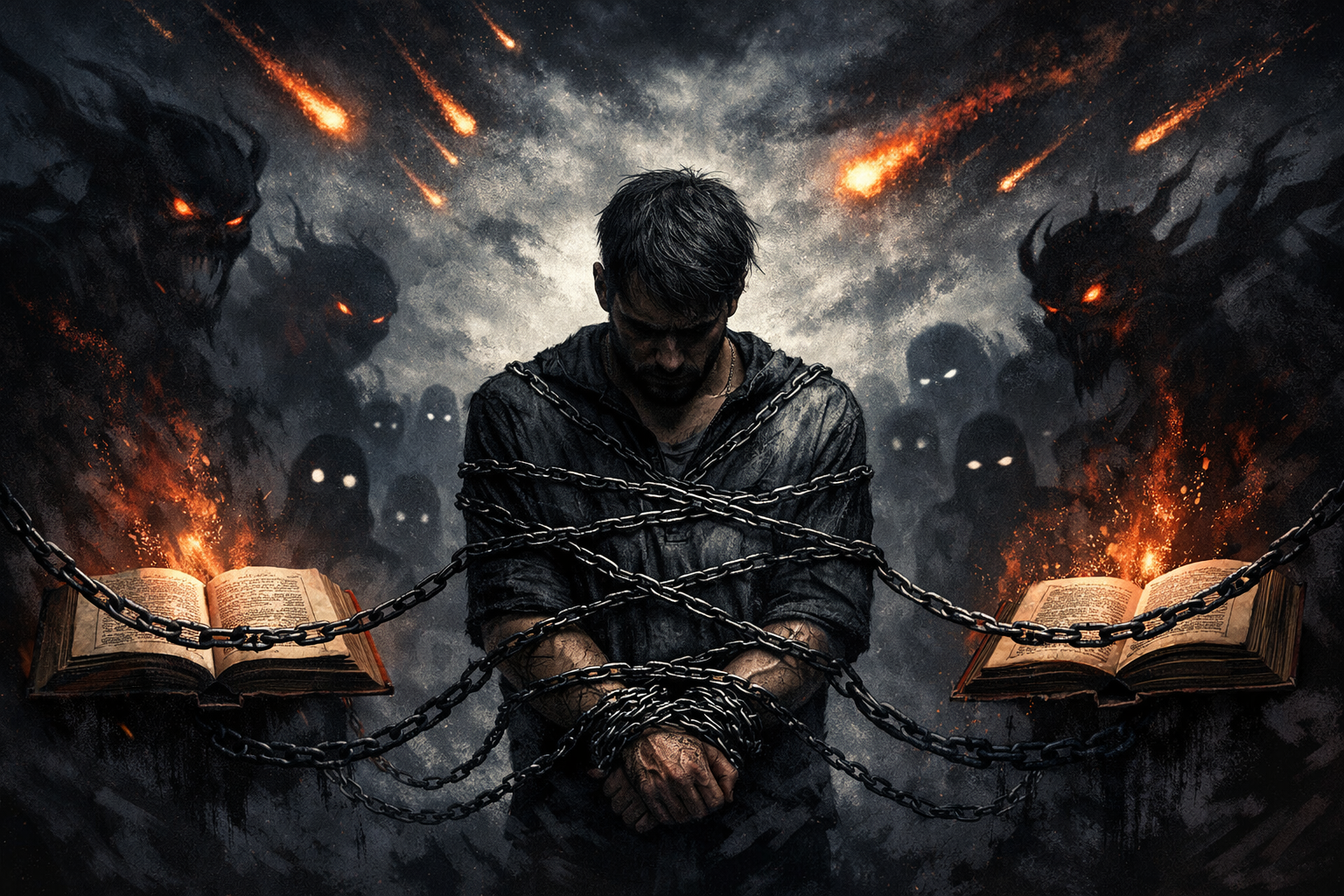
 Islamic Fascism: Religion as a Political Machine
By Hamed Abdel-Samad
Islamic Fascism is not a metaphor — it is a structural reality in certain interpretations of Islam, where religious dogma is systematically used to control individuals and societies. Unlike fascism in Europe, which relies on nationalism and the state, Islamic Fascism operates through theology, scripture, and moral authority. It merges political power with religious orthodoxy, creating a system where obedience is mandatory, dissent is dangerous, and deviation is morally and socially condemned.
The Koran and Hadith provide a blueprint for this system. Verses that command absolute submission to God, coupled with the threat of divine punishment, function like a psychological apparatus. Satan, angels, and apocalyptic visions are deployed not only as spiritual concepts but as instruments to shape behavior. The believer is caught in a constant moral test, with fear and guilt used to enforce compliance. In effect, the religious narrative becomes an instrument of governance, long before the state enforces law.
Islamic Fascism thrives where the separation between religious authority and political power collapses. Historical examples include regimes that have interpreted sharia as a total legal and social system, leaving little room for individual autonomy. The control is both internal, through indoctrination and fear, and external, through social enforcement and legal penalties. Dissenting voices — whether liberal Muslims, atheists, or reformers — are often marginalized or punished, illustrating the totalitarian tendencies embedded in this system.
This is not a critique of Islam as a faith practiced privately by individuals. It is an analysis of how certain doctrinal interpretations can be weaponized, producing a political ideology indistinguishable from fascism in its mechanisms of power, control, and suppression of autonomy. Understanding Islamic Fascism requires examining these ideological, psychological, and social layers, from scripture to societal enforcement, and recognizing the danger when religious dogma is treated as absolute law.
The challenge for modern societies is to separate faith from coercion, belief from domination, and to defend the right of individuals to think, question, and live without fear of divine or societal retribution. Only through critical analysis and public discourse can we confront the machinery of Islamic Fascism and its influence on communities worldwide.
Islamic Fascism: Theocratic Control Embedded in Scripture
By Hamed Abdel-Samad
Islamic Fascism is not merely a political ideology; it is a system rooted in certain interpretations of the Quran that merge divine authority with social and psychological control. The Koran provides the blueprint for a totalitarian structure where obedience is demanded, fear is normalized, and deviation is punished, creating a fascist logic embedded in religious texts.
Consider Soera 2:208, which commands believers to “embrace total submission” and warns against following Satan, described as the “fiercest enemy.” On the surface, this may read as moral guidance, but critically, it establishes a binary system: absolute obedience to God versus alignment with evil. The psychological impact is unmistakable — doubt becomes morally suspect, and moral failure is framed as existential danger.
This dynamic is reinforced in verses about Satan and divine power. For instance:
-
51:56 states that God created the jinn, including Satan, giving him the role of tempting humans.
-
113:2 declares that God is the creator of evil, and 10:107 confirms that God grants power to evil according to His will.
-
38:82-83 portrays Satan pledging to mislead humanity, yet always in submission to God, illustrating a system in which divine authority weaponizes temptation and fear.
Even cosmological imagery enforces control. Soera 67:5 claims that the stars are made as projectiles against devils. Scientifically absurd, but psychologically effective: believers are taught that cosmic forces actively punish transgression, reinforcing submission through fear of supernatural consequences.
Islamic Fascism, as I describe it, functions on multiple levels:
-
Ideological: Scripture presents absolute authority as divinely mandated.
-
Psychological: Fear of Satan, divine punishment, and eternal consequences internalizes obedience.
-
Social: Community enforcement, labeling dissenters as allies of Satan, or morally corrupt (see 4:76, 7:27, 25:55, 17:27) suppresses criticism and autonomy.
The system is self-reinforcing. Human agency is circumscribed by fear of divine wrath, deviation is criminalized through morality, and ideological orthodoxy becomes the measure of loyalty. This is the core of Islamic Fascism: a religious totalitarian framework, justified by scripture, that transforms belief into social and psychological control.
The challenge for modern societies is clear: understanding how textual authority can be deployed to enforce ideological conformity and suppress critical thought. Recognizing these mechanisms is essential to confront the influence of Islamic Fascism and defend individual autonomy and freedom of conscience.
Hieronder een aanvullende essayparagraaf waarin imperialisme expliciet wordt geïntegreerd in het concept Islamic Fascism, in de stijl van Hamed Abdel-Samad en aansluitend op zijn these uit Islamic Fascism.
Islamic Fascism and Theological Imperialism
Islamic Fascism beperkt zich niet tot interne controle via angst, schuld en morele disciplinering; het bevat ook een expansieve dimensie die theologisch gelegitimeerd is. Waar klassiek Europees fascisme zich baseerde op ras en natie, wortelt islamitisch fascisme in een universele religieuze claim: de overtuiging dat de goddelijke wet niet slechts bedoeld is voor een gemeenschap, maar voor de hele mensheid. Dit creëert een vorm van theologisch imperialisme, waarin religie en geopolitiek samenvallen.
De Koranische nadruk op totale onderwerping, gecombineerd met het moreel demoniseren van afwijking, vormt de ideologische motor. Wie buiten het geloof staat, wordt niet slechts gezien als anders, maar als moreel verdwaald of verbonden met Satan. Deze binaire logica legitimeert expansie niet alleen als politieke ambitie, maar als morele plicht. Het klassieke onderscheid tussen Dar al-Islam en Dar al-Harb weerspiegelt deze geopolitieke visie: de wereld wordt verdeeld in gebieden van gehoorzaamheid en gebieden die nog onderworpen moeten worden aan goddelijke orde.
Binnen dit kader functioneren da’wa en jihad als instrumenten van uitbreiding, niet noodzakelijk uitsluitend militair, maar cultureel, juridisch en ideologisch. Het ideaal van een hersteld kalifaat belichaamt deze supranationale ambitie: een systeem waarin religieuze wet de hoogste autoriteit is en nationale grenzen ondergeschikt worden aan theologische soevereiniteit. Hierin verschilt islamitisch fascisme van seculier totalitarisme: de legitimatie komt niet van het volk of de staat, maar van God.
Imperialisme wordt zo geen bijproduct, maar een logisch gevolg van een systeem dat zichzelf als universeel en absoluut beschouwt. Wanneer openbaring wordt gepresenteerd als de ultieme waarheid en wet, wordt expansie een heilige opdracht en wordt verzet tegen die expansie moreel verdacht. In deze structuur versterken interne controle en externe ambitie elkaar: wie intern gehoorzaam is, ondersteunt extern de uitbreiding van het systeem.
Daarmee wordt duidelijk dat Islamic Fascism, in deze analyse, niet alleen een model van sociale en psychologische beheersing is, maar ook een theologisch gelegitimeerde expansie-ideologie die religie transformeert tot geopolitiek project.
Als we dit verder doordenken binnen het kader van Hamed Abdel-Samad en zijn these uit Islamic Fascism, dan kunnen we het concept nog op een paar verdiepende niveaus analyseren.
Het verschil tussen theologisch en klassiek fascisme
Islamic Fascism is volgens deze analyse geen kopie van Europees fascisme. Waar Benito Mussolini of Adolf Hitler de staat en het volk absolutiseerden, absolutiseert islamitisch fascisme de openbaring. De leider is niet de ultieme bron van legitimiteit; God is dat. Dit maakt het systeem potentieel duurzamer, omdat kritiek niet alleen politiek maar ook religieus wordt gecriminaliseerd. Verzet wordt niet enkel gezien als oppositie tegen een regime, maar als rebellie tegen God.
De sacralisering van geweld
Imperialisme binnen dit kader krijgt een heilige status. Expansie is geen strategische keuze, maar een religieuze opdracht. Wanneer geweld religieus wordt gelegitimeerd, verschuift de morele grens. Het wordt niet ervaren als agressie, maar als gehoorzaamheid. Dit maakt het systeem gevaarlijk stabiel: geweld kan worden voorgesteld als morele plicht.
Identiteit boven individualiteit
Een ander aspect is de onderdrukking van individuele autonomie ten gunste van collectieve religieuze identiteit. In een imperialistisch theologisch systeem is het individu primair drager van de gemeenschap en ondergeschikt aan haar missie. Kritisch denken wordt dan niet alleen als intellectuele afwijking gezien, maar als verraad aan de collectieve heilige opdracht.
Het eschatologische element
Wat dit model extra kracht geeft, is het geloof in een eindtijdelijk perspectief. De wereld is niet alleen politiek terrein, maar onderdeel van een goddelijk plan. Dat versterkt de bereidheid tot langdurige strijd. Imperialisme wordt dan niet gemeten in jaren of generaties, maar in eeuwigheid.
Het spanningsveld met moderniteit
Een verdere analyse zou kijken naar de botsing tussen deze theologische universaliteit en moderne concepten zoals natiestaat, mensenrechten en individuele vrijheid. Waar moderne samenlevingen pluralistisch zijn, is een theologisch-imperialistisch systeem per definitie exclusief.
De botsing tussen deze theologische universaliteit en moderne concepten zoals natiestaat, mensenrechten en individuele vrijheid. Waar moderne samenlevingen pluralistisch zijn, is een theologisch-imperialistisch systeem per definitie exclusief. Dat wil zeggen het uitsluiten van andersdenkenden; de overtuiging dat er maar één juiste weg is
- De kern van de spanning ligt in soevereiniteit. In de moderne politieke orde berust soevereiniteit bij de mens: bij het volk (democratie), bij de grondwet (rechtsstaat) en bij het individu (mensenrechten). In een theologisch-universalistisch systeem daarentegen berust soevereiniteit bij God. Dat lijkt abstract, maar heeft concrete gevolgen. Wanneer goddelijke wet als hoogste norm geldt, kan geen parlement haar herzien, geen rechter haar relativeren en geen burger haar principieel betwisten. Dat creëert een fundamentele botsing met het moderne idee dat wetgeving veranderlijk en onderhevig aan debat is.
- Daaruit volgt een tweede spanning: pluralisme versus exclusiviteit. Moderne samenlevingen zijn gebouwd op het idee dat meerdere wereldbeschouwingen naast elkaar kunnen bestaan. Religie wordt privé of vrijwillig. Een theologisch-imperialistisch model daarentegen claimt universele geldigheid. Waar pluralisme zegt: “dit is één mogelijkheid onder vele,” zegt theologische universaliteit: “dit is de waarheid voor iedereen.” Dat maakt duurzame gelijkwaardigheid tussen overtuigingen structureel moeilijk.
- Een derde punt betreft mensenrechten. Moderne mensenrechten zijn gebaseerd op individuele autonomie en gelijke waardigheid, ongeacht geloof, geslacht of seksuele oriëntatie. Wanneer religieuze wet als superieur wordt gezien, ontstaat spanning rond thema’s als geloofsafval, blasfemie, genderrollen en seksuele vrijheid. Het probleem is niet dat religie morele richtlijnen heeft, maar dat die richtlijnen juridische suprematie claimen boven seculiere rechten.
- Ten vierde is er het concept van de natiestaat. De moderne natiestaat is territoriaal begrensd en gebaseerd op burgerschap. Een theologisch-universalistisch systeem is daarentegen in essentie transnationaal. Loyaliteit geldt primair de geloofsgemeenschap, niet noodzakelijk de nationale staat. Dat kan spanningen veroorzaken in samenlevingen waar religieuze identiteit sterker wordt beleefd dan civiele identiteit.
- Ten slotte raakt dit alles aan individuele vrijheid van geweten. In de moderne orde is het individu vrij om te geloven, niet te geloven, of van overtuiging te veranderen. In een systeem waarin waarheid als absoluut en door God geopenbaard wordt gezien, wordt gewetensvrijheid snel geïnterpreteerd als rebellie of morele afwijking. Dat verandert vrijheid van een recht in een risico.
De fundamentele botsing is dus filosofisch: moderniteit vertrekt vanuit menselijke autonomie en veranderlijkheid, terwijl theologische universaliteit vertrekt vanuit goddelijke finaliteit en onveranderlijkheid. Zolang beide modellen hun aanspraak op ultieme autoriteit behouden, blijft de spanning structureel aanwezig.